The Keytar, the Charm, and the Conquest: When Maarty Broekman Wooed Alesha Dixon on BGT
The stage of Britain’s Got Talent has seen its fair share of eccentricities over the decades, but few moments perfectly captured the show’s chaotic, lighthearted spirit quite like Week 6 of the 2013 auditions. Enter Maarty Broekman, a flamboyantly charming Dutch performer who proved that you don’t just need a great voice or a wild stunt to capture the nation’s attention—sometimes, all you need is a keytar and an unfiltered crush on a judge.
An Unconventional Entrance
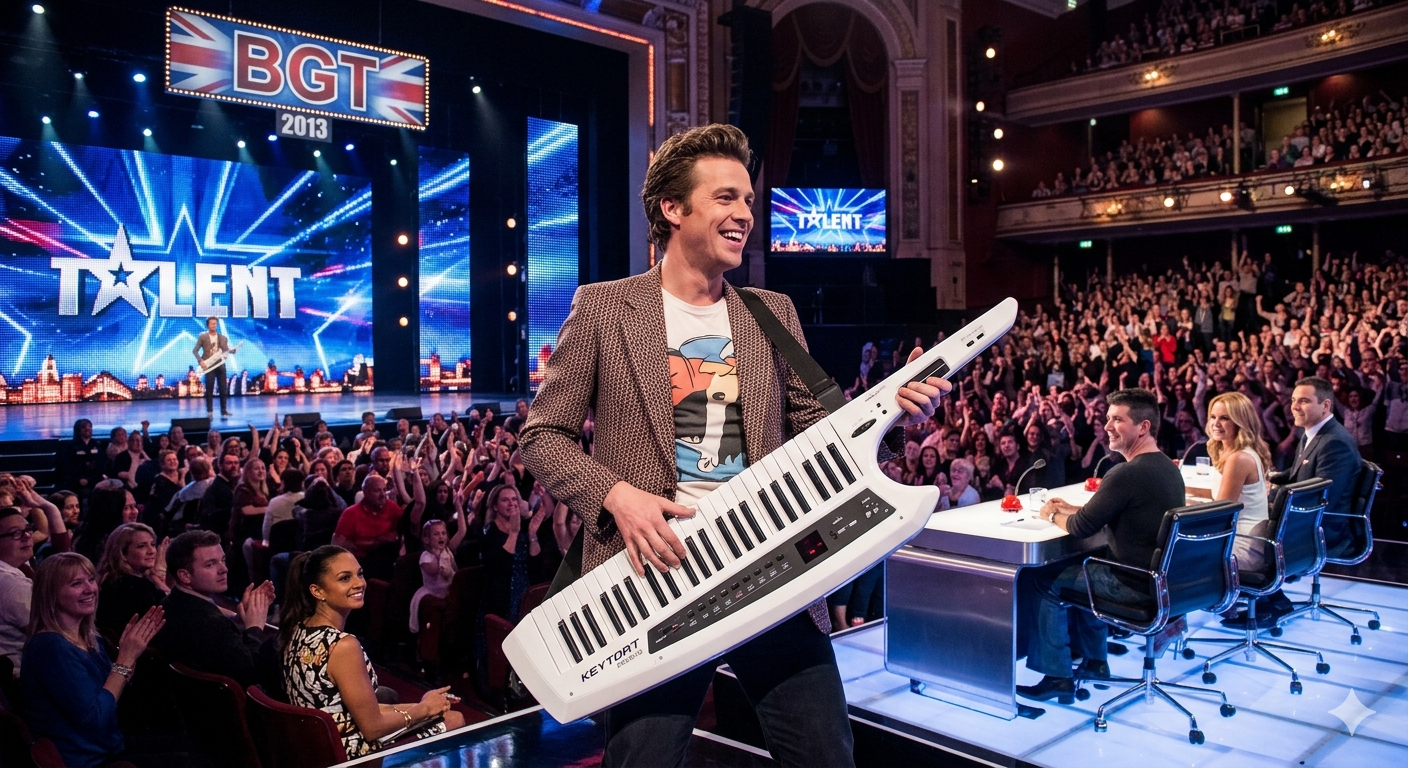
When Maarty first stepped onto the BGT stage, the audience and judges weren’t entirely sure what to expect. Dressed with a quirky, retro-pop flair and slinging a keytar—the ultimate 1980s hybrid of a keyboard and a guitar—over his shoulder, he exuded an immediate, unbothered confidence.
Before he even struck his first chord, Maarty’s playful energy filled the auditorium. What followed was a performance that successfully blurred the lines between genuine musical performance, stand-up comedy, and performance art.
Mission: Win Over Alesha Dixon
While the audience was laughing and clapping along to the synth-heavy, comedic track, it quickly became apparent that Maarty had a very specific target audience of one: judge Alesha Dixon.
With a cheeky smile and laser-focused eye contact, Maarty directed the most flirtatious elements of his routine straight toward the judges’ panel. He played up his European charm, using his keytar as a musical extension of his courtship.
The Panel’s Reaction
The dynamic created an instantly viral television moment:
-
Alesha Dixon was visibly flattered and kept in stitches, laughing through the blatant, good-natured serenading.
-
Simon Cowell, Amanda Holden, and David Walliams watched in amusement as Maarty completely bypassed them to win over their colleague.
-
The Audience fell in love with his sheer audacity, cheering on his relentless, tongue-in-cheek attempt to woo the pop star.
The Legacy of the Act
Ultimately, Maarty Broekman’s audition became a textbook example of what makes the Got Talent franchise so enduring. It wasn’t technically flawless, nor was it a traditional display of high-art talent. Instead, it was an incredibly memorable piece of pure entertainment.
Maarty weaponized eccentricity and localized it into a fun, interactive narrative that had the entire room—and millions of viewers at home—smiling from ear to ear.